Why Foundational Math Skills Matter to Student Success
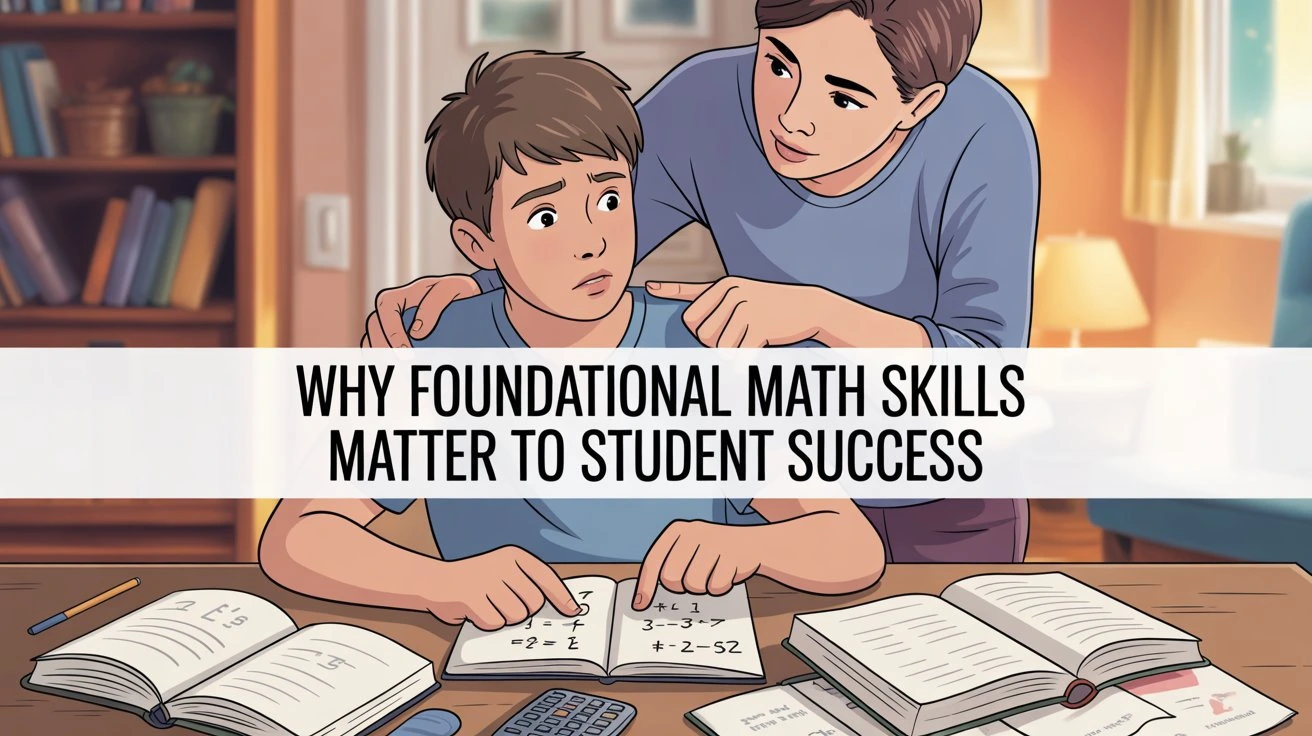



Many students struggle with maths, not because the subject is hard, but because their basics were never clear. When foundational maths skills are weak, every new topic feels confusing. But when the foundation is strong, maths becomes logical, manageable, and even enjoyable.
This is why the importance of maths foundation cannot be ignored. Strong maths basics support academic success, confidence, daily problem-solving, and future career opportunities for students from Class 1 to Class 12.
.webp)
The maths foundation refers to the core skills students must understand before moving to advanced maths topics.
Number sense understanding quantity and value:
This is the ability to understand what numbers actually mean, not just read them. A child with good number sense knows that 20 is much bigger than 5, can estimate roughly, and understands whether an answer makes sense.
Counting and comparing numbers:
This involves counting objects correctly and comparing numbers to know which is more, less, or equal. It helps children understand order, difference, and quantity in everyday situations.
Basic operations addition, subtraction, multiplication, division:
These are the core calculation skills students use daily. When children understand how and why these operations work, they can solve problems faster and with more confidence.
Place value:
Place value helps children understand the value of digits based on their position, such as the difference between 3, 30, and 300. Strong place value is essential for calculations, decimals, and higher maths.
Patterns:
Recognising patterns helps children predict what comes next and understand relationships between numbers. This skill later supports algebra, sequences, and logical thinking.
Simple measurement length, weight, time, money:
Measurement connects maths to real life. It helps children read clocks, handle money, measure ingredients, and understand size, distance, and time in daily activities.
These skills act like building blocks. Without them, topics like fractions, algebra, geometry, and data handling become difficult and stressful.
Foundational maths skills are the basic abilities that allow students to think clearly with numbers, not just memorise formulas.
Key foundational skills include:
When students develop these skills early, they move smoothly from objects and visuals to mental strategies and written methods.
Many parents ask why maths basics are important, especially when students move to higher classes. The reason is simple: advanced maths depends entirely on the basics.
1. Better academic performance
Research shows that early maths skills strongly predict future academic success. Students with a clear understanding of number sense and place value perform better in school exams and assessments, even in higher classes.
2. Easier learning of advanced topics
Difficulties in fractions, algebra, or problem-solving usually come from gaps in basic skills. When students strengthen their foundation, new topics start to “click” instead of feeling overwhelming.
3. Stronger thinking skills
Working with numbers improves:
These skills support learning in all subjects, not just maths.
The importance of maths foundation goes far beyond school marks.
Daily life skills depend on maths basics:
Students with strong maths basics become more confident, independent, and accurate decision-makers.
When students understand maths basics:
Weak basics often lead to math anxiety, fear of mistakes, and avoidance. A strong foundation replaces fear with confidence and a positive mindset.
Parents can spot maths foundation gaps by observing simple signs:
Talking to teachers and reviewing schoolwork can help identify whether the issue is with understanding concepts or just speed and practice.
Parents can also use daily activities to spot weaknesses:
Struggles in these simple activities often point to weak number sense.
The Foundation Course at Eduzia Learning is designed to rebuild maths basics from the ground up for students from Class 1 to Class 12.
The course ensures students master basics first, so advanced topics become easier and less stressful.
When maths basics are strong:
Fixing gaps early saves years of struggle later.
If your child is struggling with maths or lacks confidence in basics, addressing it early can make a huge difference.
Build a strong maths foundation with Eduzia Learning’s personalised Foundation Course.
Book a Demo Class and help your child gain clarity, confidence, and long-term success in maths.
Foundational maths skills support all future learning. Without them, students struggle with advanced topics and lose confidence.
A strong foundation reduces confusion, improves problem-solving, and helps students learn new concepts faster and with less stress.
They lower mental load, allowing students to focus on understanding rather than struggling with basic calculations.
Maths helps with daily decision-making, logical thinking, money management, and time planning, not just exams.
Weak basics can lead to poor performance, math anxiety, low confidence, and long-term academic difficulties.
Maths foundation starts in early classes but can and should be strengthened at any stage from Class 1 to Class 12.
Eduzia Learning offers 1-to-1 sessions, gap-based teaching, and structured revision to strengthen core maths concepts.
Yes. The course is designed especially for students who need personalised attention and concept clarity.
1-to-1 learning focuses entirely on the student’s gaps, pace, and understanding, unlike one-size-fits-all group classes.
With regular sessions and focused revision, parents usually notice improved confidence and clarity within a few weeks.