CBSE Passing Criteria for the 2025-26 Academic Year: Key Details for Students



The Central Board of Secondary Education (CBSE) board exams are some of the most important exams for students in India. They are conducted in classes 10th (secondary) and 12th (higher secondary). Depending on their chosen stream, these exams assess students’ academic knowledge and performance across various subjects, such as English, mathematics, science, and others.

For the 2025-26 academic year, CBSE has announced the passing criteria for all subjects on its official website. Here's a simplified breakdown in this blog:
CBSE’s 2025–26 passing criteria keep the same core rule for Classes 10 and 12: a student must score at least 33% marks (grade above E) in each subject to pass, with separate conditions where practical exams are involved.
To qualify for the certificates, students must score at least a Grade D in each subject. If a student gets a Grade E in any subject, they will need to take a supplementary exam to improve their grade.
Levels | Passing Marks Required | Passing Grades Required |
Board Name | Central Board of Secondary Education | Central Board of Secondary Education |
Class 10th | Minimum of 33% marks | Minimum D-Grade |
Class 12th | Minimum of 33% marks | Minimum D-Grade |
Students who don’t meet the CBSE minimum passing marks or grades in a subject or overall will need to take a supplementary exam for that subject. Otherwise, they will be marked as failed.
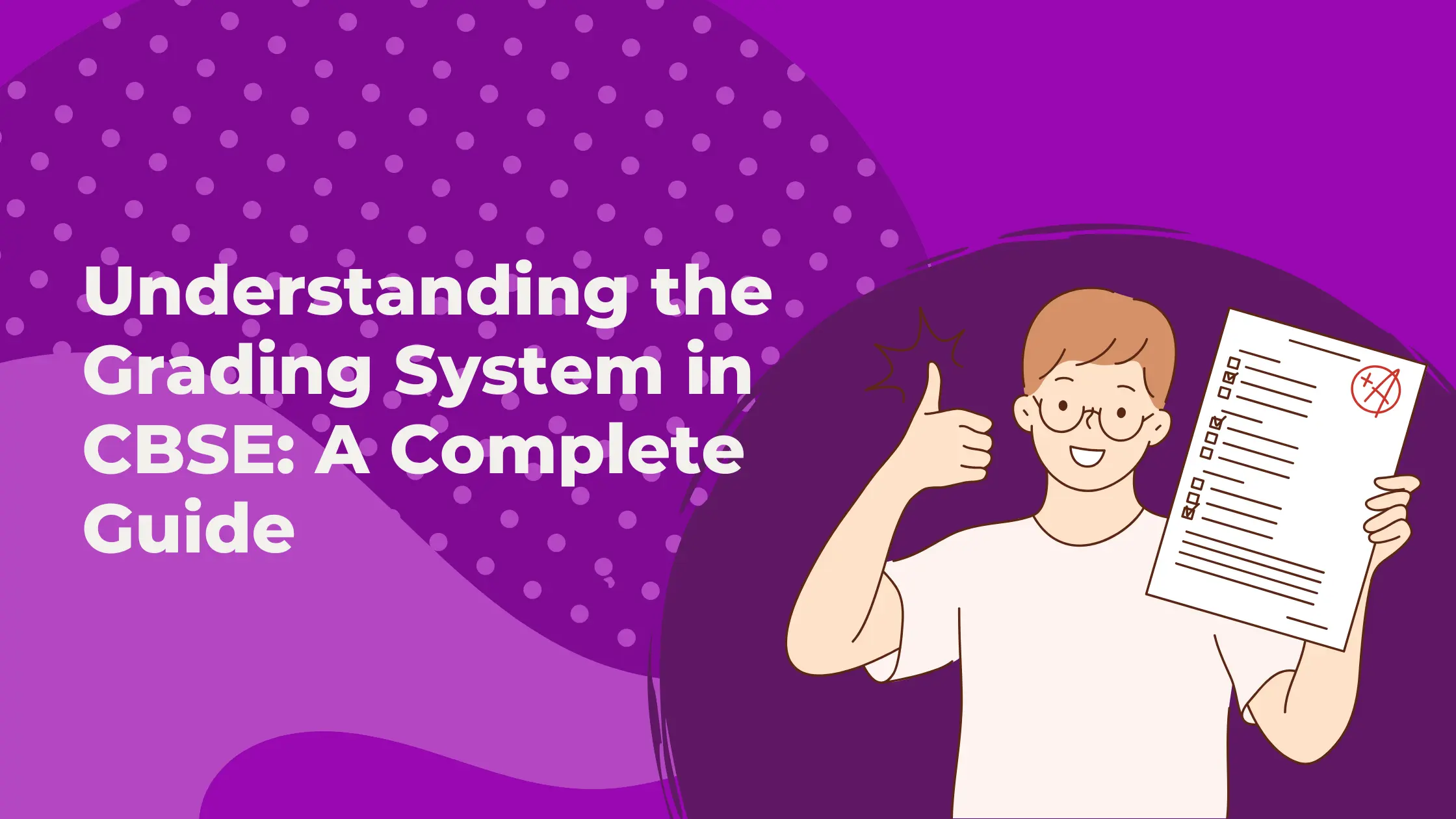
To make it easier to understand how a grade is calculated, we've simplified the process for you.
The CBSE board exams for classes 10 and 12 in 2025 will follow a new exam pattern. There will be more multiple-choice questions (MCQs) and questions that test your skills and understanding. Thus, there will be fewer short-answer and long-answer questions compared to last year's exam paper.
The CBSE Class 10 board exams are usually held in February to March, while the Class 12 exams typically take place in February to April.
Check out the timetable for the 10th and 12th main exams through the link below:
To help students understand the exam pattern and marking criteria, CBSE provides clear guidelines for passing. If you’re curious about the types of questions asked and how marks are distributed, keep reading to find out more.
CBSE passing criteria 2025-2026 Class 12 |
CBSE understands the needs of students with disabilities and offers various exemptions and support as outlined in the Rights of Persons with Disabilities Act, 2016.
| Conducting Authority | Central Board of Secondary Education (CBSE) |
| Maximum marks | 100 (Theory + Practical) |
| Total duration | 180 minutes |
Theory | Practical | Total |
80 | 20 | 100 |
80 | 20 | 100 |
Schools calculate a student’s practical marks based on their overall academic and non-academic performance. The practical assessment is usually calculated for 20 marks, and the theory exam paper is set for 80 marks. The practical marks are given by the subject teacher and are based on:

Meeting the CBSE passing criteria is not only about studying harder, it’s about preparing in the right way. Since CBSE now focuses more on competency-based questions, MCQs, and practical performance, students need a balanced and planned approach. Here’s a simple, step-by-step guide to help you prepare confidently for your board exams.
If you’re worried about meeting the CBSE passing criteria for 2025–26, Eduzia’s one-on-one Crash Course is the right solution. This course is specially designed for last-minute revision, competency-based question practice, and exam-focused preparation.
Whether you’ve missed classes or need extra support to pass confidently, Eduzia’s Crash Course has you covered.
Enroll in Eduzia’s Crash Course today and secure your CBSE Board Exam success 2025–26!
The CBSE minimum passing criteria for the academic year 2025-26 require students to score at least 33% overall in each subject to pass.
The CBSE minimum passing marks for the academic year 2025-26 state that students must achieve at least 26.5 marks in each subject to meet the passing requirements.
Each CBSE exam lasts for 3 hours (180 minutes).
To pass and qualify for higher studies, students need at least a Grade D in each subject.
Yes. For subjects with practicals, students must secure the minimum passing marks separately in theory and practicals. Failing either component may result in a supplementary exam.
Yes. CBSE has increased the weightage of competency-based and MCQ-type questions. These questions test understanding, application, and critical thinking rather than rote learning
Absolutely. Eduzia’s Crash Course is specially designed for last-minute revision and exam-focused preparation, making it ideal for students who feel short on time or missed earlier classes.
Yes. While the course helps students meet CBSE passing criteria, the structured guidance and practice also help many students score better and gain confidence before the exam.